

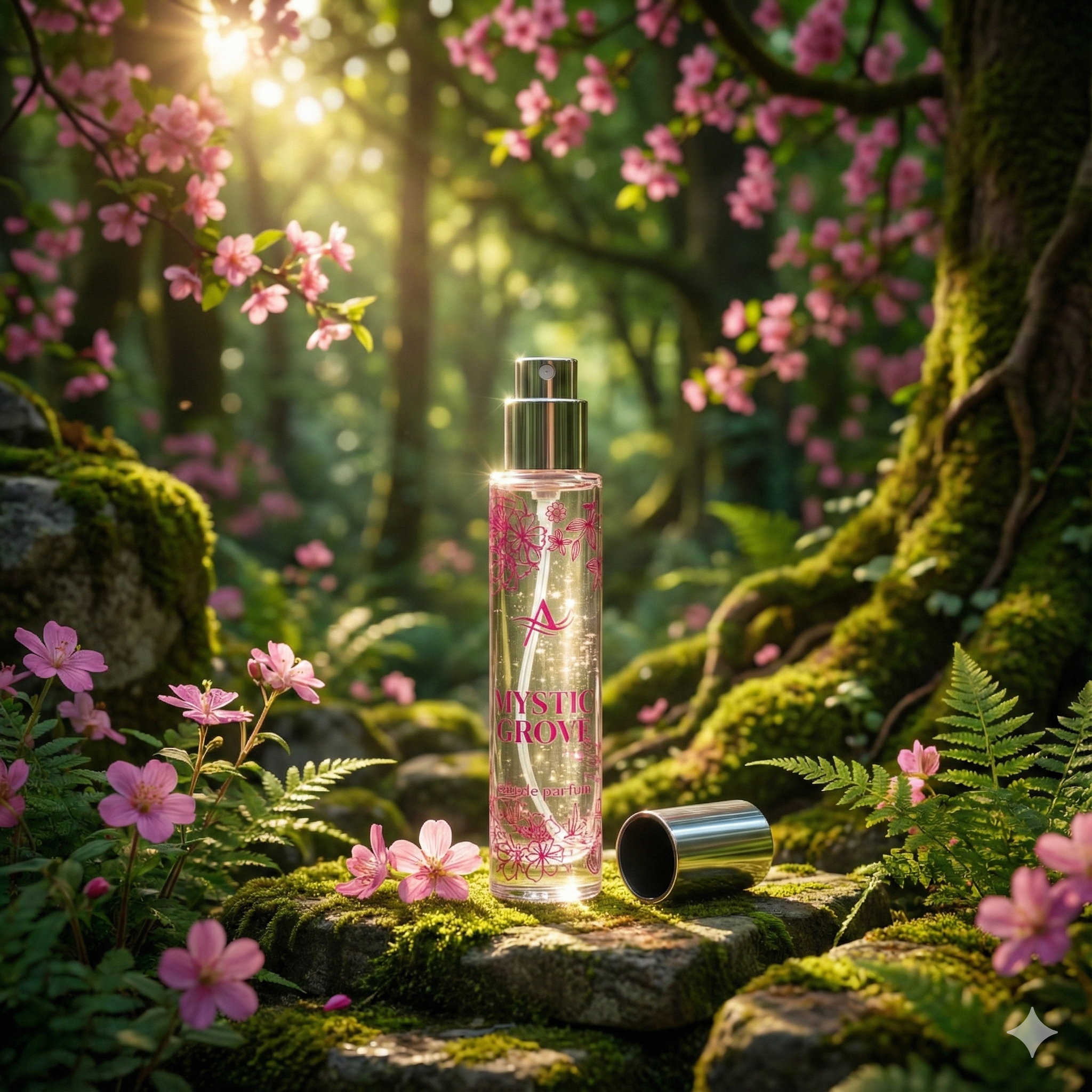
India is home to the world’s oldest continuous fragrance tradition from Kannauj’s ancient deg-bhapka attar distilleries to the jasmine fields of Madurai and the sandalwood groves of Karnataka. Today, a new generation of founders is bringing 100% natural Indian perfumery to global markets. This guide covers everything you need to launch with confidence.
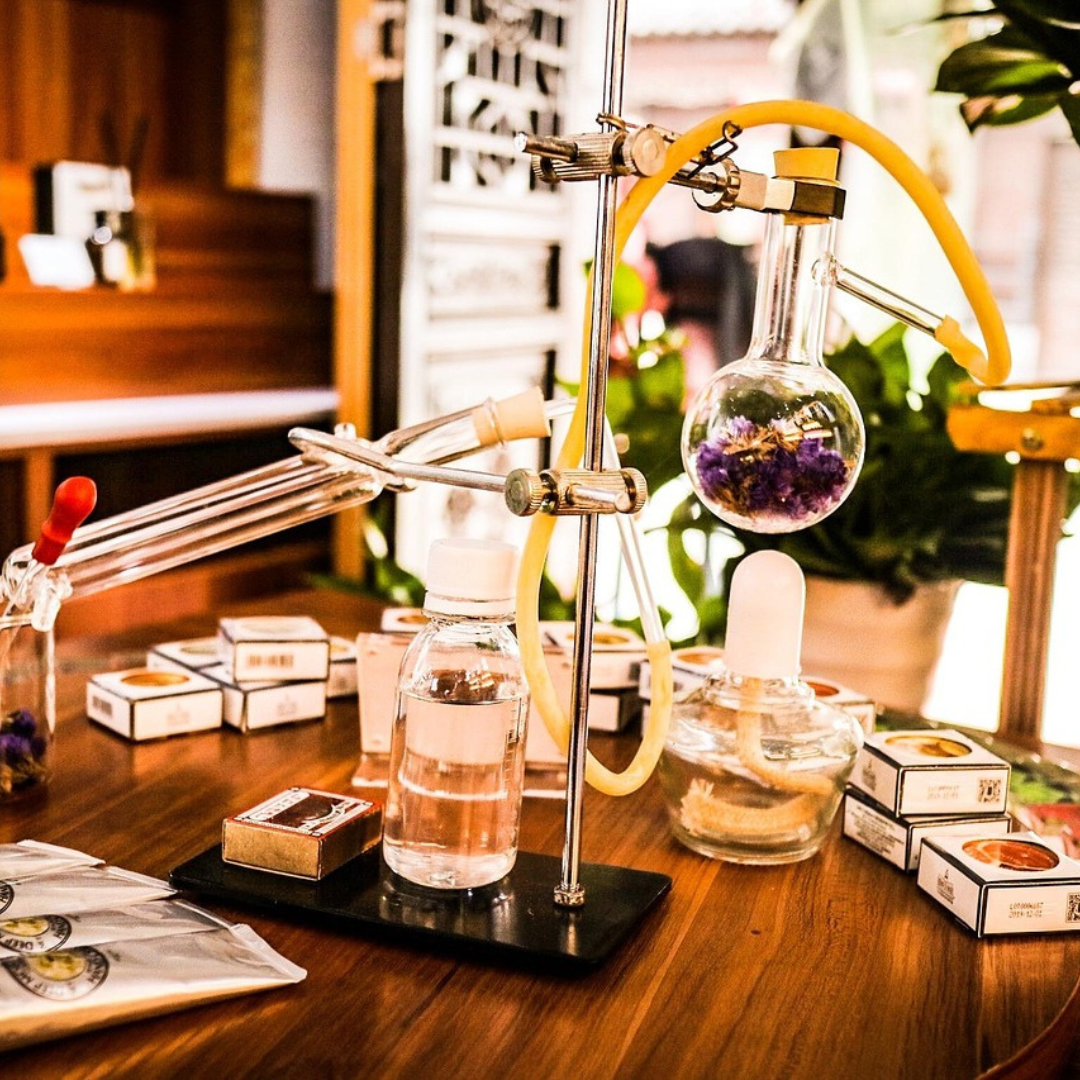
Formulation Stability: The Chemistry You Cannot Ignore
Synthetic fragrances are engineered to be uniform. Indian perfumes of all kinds, whether they are Kannauj rose attar, Mysore sandalwood oil or Madurai jasmine absolute, are all-natural and fundamentally different. Each botanical extract consists of hundreds of naturally occurring molecules, many of which are reactive. It is this reactivity that accounts for their amazing complexity. That’s also why stability has to be actively managed.
The Three Enemies of Natural Fragrance Stability
| CHALLENGE | SOLUTION |
| UV Light: Photodegradation breaks down unstable aromatic molecules, causing scent drift and discolouration. Citrus oils (sweet lime, kaffir lime) and furanocoumarins are particularly vulnerable. | Store and retail in dark amber or cobalt blue glass. Avoid clear packaging for any formula containing citrus or floral absolutes. Many Indian artisan glassmakers in Firozabad supply UV-protective bottles suitable for export. |
| Oxidation: Exposure to air causes monoterpene-rich oils tulsi, frankincense (salai), black pepper to oxidise, becoming potential sensitisers and losing their top-note character. | Add Vitamin E (Tocopherol) as a natural antioxidant. Use nitrogen-flush bottling where possible. Reduce headspace before sealing. Tocopherol-rich wheat germ oil (from Madhya Pradesh producers) is a cost-effective natural option. |
| Temperature Fluctuations: India’s extreme seasonal range from Rajasthan summers above 45°C to Himalayan winters accelerates degradation and can cause cloudiness in alcohol-based formulas containing wax-bearing absolutes. | Store at 15–20°C. Use insulated packaging during May–July shipping. Add clear storage instructions on labels in both English and Hindi/regional language for domestic customers. |
The ‘imperfection’ of a natural Indian formula its evolution over time, its connection to the soil of Kannauj or the hills of Nilgiri is its greatest differentiator. Founders who understand this turn chemistry into a storytelling asset.
Shelf Life: Transparency as Competitive Advantage
A typical well-formulated natural Indian perfume has a shelf life of 12 to 18 months from production date. This is not a flaw it is a feature, if positioned correctly. Indian consumers familiar with fresh agarbatti, homemade ittar, and seasonal flower garlands already understand the concept of fragrance that is alive and time-bound.
The ‘Living Fragrance’ Brand Narrative
Brands that educate customers through product copy, inserts, and content marketing that natural perfumes are ‘living’ botanical products build stronger repurchase rates. The Indian consumer who understands they hold something closer to a fresh mogra garland than a factory product is a customer who values, protects, and rebuys.
Small-Batch Manufacturing: The Right Operational Model
| Why Small-Batch Works for India |
| Top note vibrancy: Customers receive fresh product where delicate top notes (kewra, champaca, citrus) are at peak expression. |
| Inventory agility: Allows rapid formulation adjustment when a new Kannauj or Mysore harvest arrives with slightly different aromatic characteristics. |
| Brand positioning: ‘Handcrafted in small batches from Kannauj’ is a premium signal that justifies higher price points and creates genuine scarcity value. |
| Reduced financial risk: Smaller production runs reduce sunk costs if a batch does not sell through before quality begins to decline critical for bootstrapped Indian founders. |
Seasonal Ingredient Variance: Turning Terroir into Brand Identity
A Kannauj rose absolute from the 2024 season will smell different from the 2025 harvest. Winter frost in Uttar Pradesh, summer rainfall patterns in Tamil Nadu, and harvest timing all influence the final chemical profile of India’s botanical extracts. For brands that understand the natural perfume market, this is one of the most powerful positioning assets available.
The Terroir Framework: Communicating Batch Variance
| Batch Change | Defensive Framing (Avoid) | Brand-Building Framing (Use) |
| Slightly deeper hue in bottle | ‘Colour may vary slightly.’ | ‘Each harvest season carries its own depth. This batch reflects the warmth of summer blooms from Madurai.’ |
| More herbaceous undertone | ‘Natural variance in ingredients.’ | ‘Our Kannauj farmers’ 2025 crop was cooler and slower — giving this edition an earthier, greener character.’ |
| Slightly lower yield of top notes | ‘Potency may vary.’ | ‘Like a fine Champagne, this vintage opens with restraint — and reveals extraordinary depth over time.’ |
This is not spin it is honest communication of what makes Indian botanical perfumery genuinely extraordinary. Brands like Naso Profumi, Bombay Perfumery, and Forest Essentials have built loyal followings by treating seasonal variance as editorial identity rather than a quality control problem.
Scalability & Ingredient Sourcing: Building a Resilient Supply Chain
India’s natural ingredient supply chain is both extraordinarily rich and highly seasonal. Kannauj rose is distilled in a narrow window each March–April. Tamil Nadu jasmine absolute production is concentrated around Madurai and Coimbatore. Mysore sandalwood is subject to Karnataka State Government controls. A single drought, regulatory change, or crop failure can disrupt a brand’s core ingredient access for an entire season.
Key Indian Ingredient Regions
| India’s Fragrance Heartlands |
| Kannauj, Uttar Pradesh Rose (gulab), jasmine (motia), kewra, marigold, vetiver (khus). Home to over 200 registered attar distillers. |
| Madurai & Coimbatore, Tamil Nadu Jasmine (sambac & auriculatum), tuberose (rajnigandha), marigold. Tamil Nadu supplies ~80% of India’s jasmine absolute. |
| Mysuru & Kodagu, Karnataka Sandalwood (Santalum album). Strictly regulated; source only from licensed Karnataka Soaps & Detergents Ltd (KSDL) or GI-certified suppliers. |
| Uttarakhand & Himachal Pradesh Geranium, lavender, valerian, rhododendron. Growing hub for cooler-climate botanicals under CSIR-IHBT programmes. |
| Northeast India Agarwood (oud) from Assam. Subject to CITES and Forest Department permits; only source from CITES-compliant cultivated plantations. |
Supply Chain Risk Mitigation
| Practical Strategies for Indian Founders |
| Multi-region sourcing: If your formula uses jasmine, build supplier relationships across both Madurai and Kannauj. No single point of failure. |
| Supplier-held safety stock: Negotiate with key Kannauj distillers to hold 3–6 months of pre-purchased inventory in temperature-controlled storage on your behalf. |
| Formula flexibility: Work with your perfumer to identify Indian substitutes that maintain the spirit of a formula – e.g. Amyris or sustainably sourced Cedarwood in place of Mysore sandalwood if supply is constrained. |
| Commodity price buffering: Build a 15–25% price buffer into COGS projections to absorb annual raw material fluctuation without compressing margins. |
| Regulatory awareness: Sandalwood, agarwood, and ambergris are subject to Indian Forest Laws, CITES, and state government controls. Always obtain documented compliance from suppliers. |
IFRA Compliance & Indian Regulatory Framework
A widespread misconception among first-time founders is that ‘natural’ automatically means ‘safe’ or ‘unregulated.’ This is incorrect. The IFRA maintains usage limits for both synthetic and natural fragrance ingredients many of which apply specifically to Indian botanicals.
Commonly Restricted Indian Naturals
| IFRA-Restricted Ingredients Common in Indian Perfumery |
| Bergamot (bergapten phototoxicity) – widely used in Indian citrus-forward attars. |
| Jasmine absolute (sensitisation limits) – India’s most exported fragrance ingredient. |
| Oakmoss & treemoss (sensitisation) – used in fougère-style Indian compositions. |
| Peru balsam – occasionally used as a fixative in traditional Indian formulas. |
| Cinnamaldehyde (cinnamon bark oil) – common in Indian spice-forward compositions. |
India-Specific Regulatory Requirements
| CHALLENGE | SOLUTION |
| Domestic Indian Market | Bureau of Indian Standards (BIS) IS 5973 governs perfumery standards. CDSCO cosmetic regulations apply to labelling, batch coding, and safety. Ensure all labels include ingredient INCI names, batch number, PAO symbol, and manufacturer address. |
| Export to EU / UK | Compliance with REACH and EU Cosmetics Regulation EC 1223/2009 is mandatory. EU requires a Cosmetic Product Safety Report (CPSR) from a qualifiedEU-based assessor. All fragrance allergens above threshold must be declared on pack. |
| Export to USA | FDA regulates cosmetics under the Federal Food, Drug, and Cosmetic Act. As of 2023, the Modernisation of Cosmetics Regulation Act (MoCRA) has expanded registration and safety substantiation requirements.Engage a US regulatory consultant. |
| CITES / Forest Products | Any product containing agarwood (oud), rosewood derivatives, or other CITES-listed species must be accompanied by full CITES documentation from supplier. Customs compliance is the brand’s responsibility. |
Building a Loyal Indian Audience for Your Natural Fragrance Line
The Indian consumer who actively seeks out an all-natural perfume brand is not the same person buying a celebrity-endorsed EDT from a mall counter. Understanding this audience at a granular level is the difference between building a loyal community and burning a marketing budget chasing the wrong buyer.
Three Core Natural Perfume Buyer Personas in India
| The Sensitivity-Driven Buyer | The Wellness Ritualist | The Connoisseur |
| Moved to natural attars and perfumes after reactions to synthetic fixatives. Seeks ingredient transparency and Ayurvedic credibility. Highly loyal once trust is built. | Treats fragrance as part of a daily ritual morning puja, yoga, or self-care. Drawn to sourcing stories and regional ingredient provenance. | Follows niche Indian and global perfume houses. Seeks genuine botanical craft from Kannauj, Mysore, or tribal forest communities. Pays a significant premium for authenticity. |
What These Buyers Are NOT Looking For
This audience actively rejects: heavy projection scents designed for air-conditioned malls, synthetic longevity at the expense of naturalness, and marketing that positions fragrance as a status symbol rather than a sensory and cultural experience. Positioning your natural perfume line against these expectations rather than competing with mainstream Indian houses on their own terms is the foundation of a defensible brand.
The Re-Application Ritual: A Feature, Not a Bug
Natural perfumes, lacking synthetic fixatives, typically stay close to the skin and require re-application every 3–6 hours. The smarter strategy is to reframe this: the re-application moment is a sensory ritual a pause to reconnect with a scent that evolves across the skin’s warmth and chemistry. Indian consumers already understand ritual fragrance application through traditions of ittar, agarbatti, and fresh flowers. Sell the ritual, not just the product.
Pre-Launch Checklist: Natural Perfume Brand Essentials
| 1. Formulation stability audit: Confirm antioxidant inclusion (Tocopherol), UV-protective packaging, and accelerated stability testing across India’s temperature extremes before finalising. |
| 2. IFRA compliance review: Have a qualified perfumer or regulatory consultant verify all botanical ingredients against current IFRA 51st Amendment limits for your target use categories. |
| 3. Shelf life labelling: Add PAO symbol and batch code to all packaging in compliance with CDSCO cosmetic labelling rules. Label in English + at least one regional language for domestic sales. |
| 4. Small-batch production schedule: Set production run sizes at 60–90 day inventory levels based on early sell-through data. Partner with Kannauj or Mysore distillers who offer small-batch supply. |
| 5. Supplier diversification: Establish at least two verified suppliers for each hero ingredient (e.g. jasmine from both Madurai and Kannauj). Document sustainability credentials for brand storytelling. |
| 6. Customer education content: Create dedicated content explaining natural perfume behaviour shelf life, batch variance, wear characteristics before launch, not after the first customer complaint. |
| 7. Regulatory compliance for export markets: Engage a cosmetics regulatory consultant for EU, UK, or USA export before finalising formulations. Domestic BIS compliance is non-negotiable from Day 1. |
| 8. GI and authenticity certification: If using Kannauj attar or Mysore sandalwood, explore obtaining Geographical Indication (GI) tag documentation from suppliers to strengthen your brand’s credibility. |