
A deep dive into cold-air diffusion technology, the neuroscience of clinical aromatherapy, and why the Aroma PVS1 is trusted by healthcare professionals across India.
There is a typical smell in every hospital. That sharp, antiseptic smell does more than just fill the nose; it also makes most people feel scared, raises cortisol levels, and is directly linked to lower patient satisfaction scores. Stop the “Clinic Anxiety” before it takes root! Using a professional-grade cold-air diffuser to scent the air in a healthcare setting is no longer a luxury; it’s a useful clinical tool.
This guide talks about the science behind healing environments that use smell, the specific scent strategies used by top hospitals and clinics, and a full review of the Aroma Machine PVS1 by Pahal Wellness, which is currently one of the best and most discreet scent diffusers for hospitals and clinics in India.
Why Scent Is the Most Powerful Tool in Healthcare Design
The sense of smell is wired in a way that is different from the other four senses. The limbic system in the brain, which includes the amygdala (which controls emotional responses) and the hippocampus (which controls memory formation), is the only part of the brain that processes sensory input directly. The thalamus is the brain’s “gatekeeper” for all other senses. The scent goes right past it.
This means that a calming scent in a waiting room is not just nice it also stops the body’s stress response before the patient even thinks about the room. This is known as olfactory architecture in healthcare design: using scent in a planned way to anchor emotional states and change how people think about the quality of care.
The business case is just as strong as the clinical evidence for hospital administrators who care about HCAHPS scores, keeping patients, and the health of their staff. People don’t think of a strategically scented facility as a place where they need medical care; they remember it as a place where they can get care.
Aroma PVS1 Review: Built for the Clinical Environment
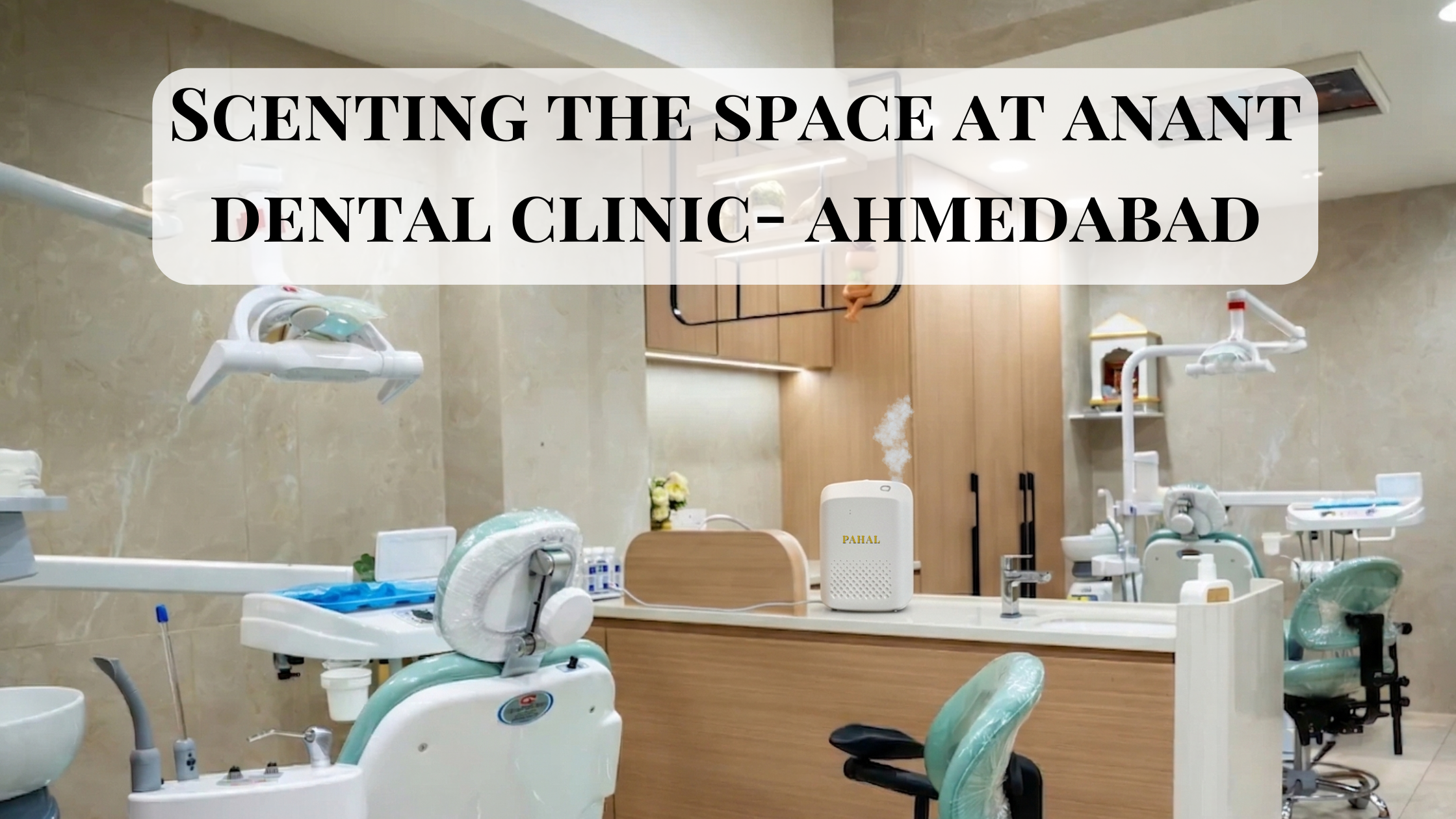
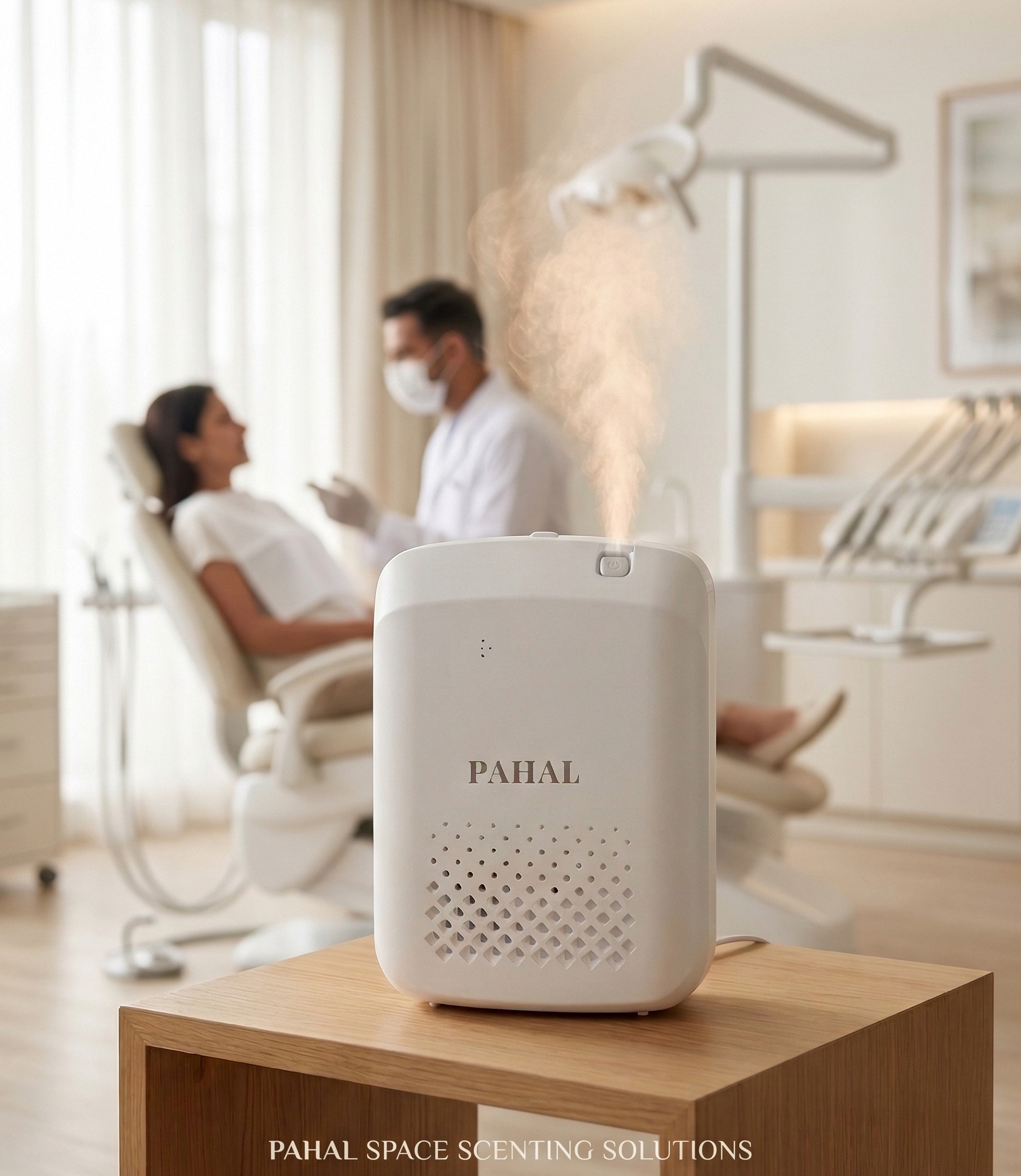
The Aroma PVS1 by Pahal Wellness is a professional cold-air aromatherapy diffuser made for places with a lot of foot traffic and a need for cleanliness, like hospitals, diagnostic centers and speciality clinics. There are three main ways that it is different from consumer-grade diffusers: the technology used to diffuse, the way it is built, and the chemistry used to refill it.
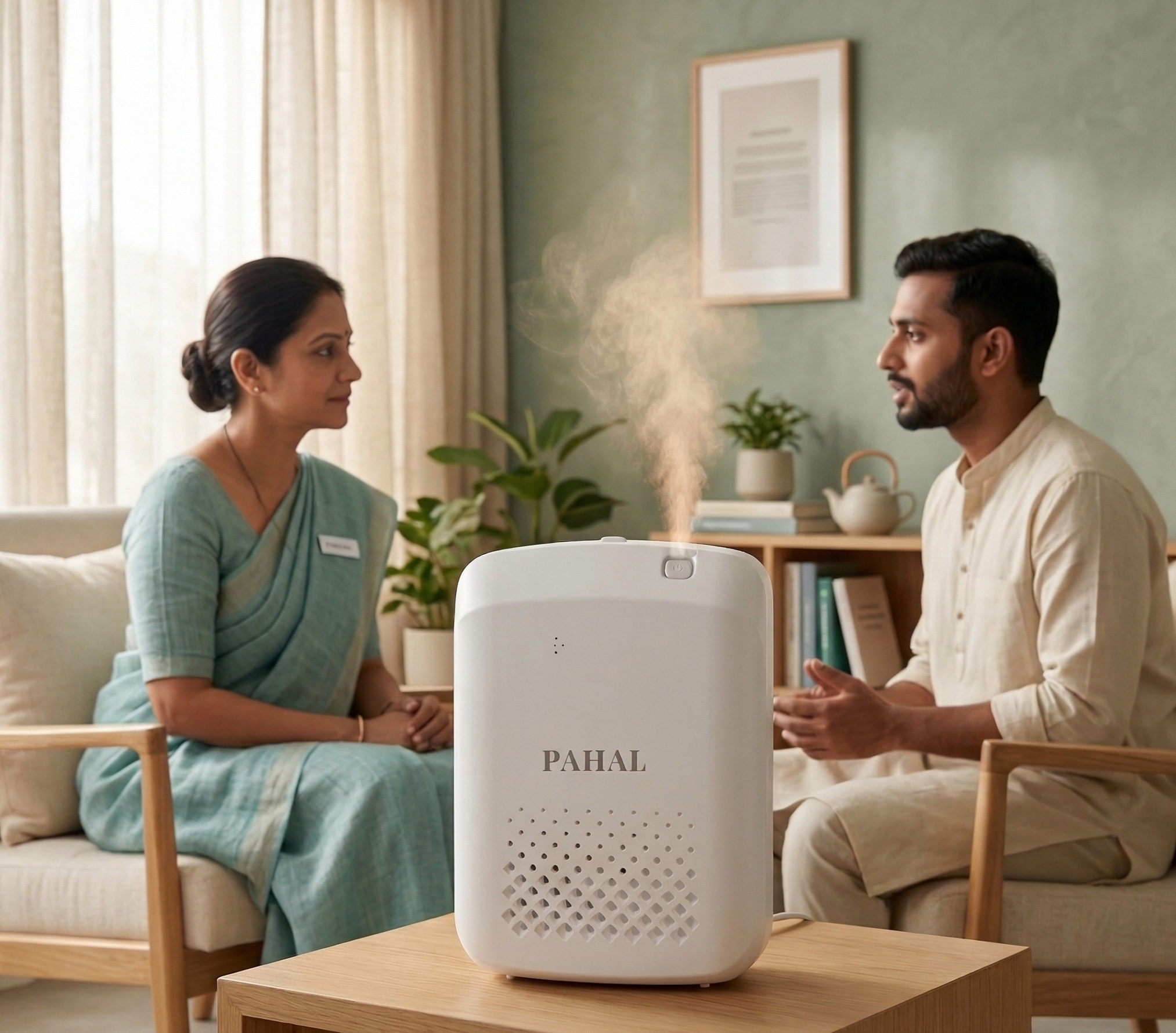
The PVS1 can take care of small spaces from 500 to 1000sqft with ease, be it waiting rooms, dental operating rooms, yoga rooms, etc.
Cold-Air Diffusion: Why It Matters in Clinical Spaces
Most home diffusers use heat or ultrasonic vibration to spread the scent, the automatic aerosol based sprays only last 10 seconds and then the fragrance is gone and they prove to be costly and is a hassle to keep changing the battery. Both of these methods add moisture, which can break down the therapeutic compounds in essential oils. The PVS1 uses cold-air nebulisation to turn fragrance into a dry, tiny mist(1-10micron size).
The outcome: no residue on medical equipment, no moisture on sterile surfaces, and no change in the oil’s smell. This is a very important difference for infection control departments.
Most Aroma diffusers use heat or ultrasonic vibration to disperse fragrance — both of which introduce moisture and can degrade the therapeutic compounds in essential oils. The PVS1 uses cold-air nebulisation, which breaks fragrance into a dry, microscopic mist. The result: no residue on medical equipment, no moisture on sterile surfaces, and no alteration of the oil’s olfactory profile. For infection control departments, this is a critical distinction.
Full Technical Specifications
| Specification | Detail |
| Diffusion Technology | Cold-Air Nebulisation (dry mist, no heat or water) |
| Coverage Area | Up to 1,000 sq ft |
| Reservoir Capacity | 400 ml (30-40day intervals between refills) |
| Power Consumption | 1.2W (ultra-low energy) |
| Weight | 0.45 kg |
| Dimensions | 140.5 × 65.5 × 178 mm |
| Charging | Long corded operation |
| Control Interface | LCD display + Bluetooth app (intensity, schedule, timing) |
| Refill Chemistry | Signature formulation of essential oils+ fragrance oils, bio-solvent that is safe as per IFRA standards |
| Guaranty | 1 year (parts replacement) and continued support henceforth |
| Service Model | Purchase the machines with proactive refills monthly with technical support |
unit weighs less than half a kilogram, so you can put it on cabinets, countertops, or wall-mounted brackets without worrying about how it will affect the structure.
Where to Deploy an Aromatherapy Diffuser in a Hospital
Effective ambient scenting for healthcare facilities requires zone-specific strategy — not a single unit deployed at reception. Patient emotions and staff cognitive states differ significantly across zones, and fragrance should be calibrated accordingly.
| Zone | Recommended Deployment | Key Benefit |
| Patient Waiting Room | 1–2 units, central or corner placement | Reduces pre-consultation anxiety; improves HCAHPS perception scores |
| Consultation Rooms | 1 unit, app-scheduled to active hours only | Automated calm atmosphere for sensitive diagnostic discussions |
| Nursing Stations | 1 unit, focus-blend fragrance profile | Supports staff alertness; associated with reduced medication error rates |
| Patient Restrooms | Wall-mount or corner, compact footprint | Discreet malodour control; reinforces hygiene perception |
| Elevators & Corridors | Single unit, consistent olfactory branding | Creates a unified sensory journey throughout the facility |
| Director’s Cabin | PVS1 + Reed Diffuser (luxury pairing) | Executive aesthetic with continuous ambient reinforcement |
For large facilities with multiple zones, the Bluetooth app allows centralised scheduling — different fragrances and intensities can be programmed for morning, afternoon, and evening shifts without any manual intervention from housekeeping staff.
Clinical Fragrance Guide: Choosing the Right Essential Oils for Your Facility
Scent selection in a clinical environment is not a matter of personal preference — it is a behavioural and physiological intervention. The following fragrance blend is an aromatic strategy that is grounded in peer-reviewed research on ambient scent in healthcare settings.
For Calm & Anxiety Reduction
Patient areas, waiting rooms, recovery wards
Pahal’s ‘Liquid Clarity Essential oil Blend’
Ingredients: Lavender, Lemongrass, Lemon, Turmeric Root and clarysage
Clinical outcome: Reduces perceived wait time, lowers cortisol, increases patient willingness to return.
The Business Case: ROI of Scent Marketing in Healthcare
Beyond patient wellbeing, strategic scent marketing for hospitals delivers quantifiable returns across three operational dimensions:
1. Patient Satisfaction & Loyalty (HCAHPS Scores)
Facilities using ambient scenting consistently report 20% higher patient satisfaction scores. Because HCAHPS scores directly affect hospital reimbursement rates in many markets, a scenting programme pays for itself within months. Patients who associate a facility with a calm, pleasant sensory environment are significantly more likely to return and to recommend the facility to family members.
2. Olfactory Brand Identity
Research demonstrates that humans recall scents with 65% accuracy after one year, compared to just 50% for visual imagery. A distinctive fragrance profile — what Pahal Wellness calls an “Olfactory Logo” — becomes the most durable brand asset a healthcare facility can own. Unlike visual branding, which fades from memory within weeks, a signature scent creates involuntary emotional recall every time a patient encounters that fragrance in another context.
3. Staff Wellbeing & Error Reduction
The operational cost of medication and clerical errors in healthcare is substantial. Focus-promoting essential oils diffused in staff-facing areas, are associated with measurable improvements in sustained attention and a reduction in error rates. This makes a hospital aromatherapy diffuser a legitimate risk management tool, not just an environmental enhancement.
Eco-Compliance & Safety: Meeting Green Hospital Standards
India’s Green Hospital certification and NABH accreditation frameworks increasingly consider indoor air quality and chemical safety as part of their scoring criteria. The Aroma PVS1 addresses these requirements directly:
- Natural Essential Oil Blend Refills: No hormone-disrupting chemicals; just pure natural ingredients as per International standards for aircare (IFRA), safe for paediatric and oncology wards.
- Cold-Air Technology: No combustion, no heat, no particulate emissions.
- Zero Wet Residue: Dry mist leaves no moisture on surfaces, preventing microbial growth on equipment.
- Low Energy Consumption: 1.2W — negligible impact on facility energy audits.
- No Aerosol Propellants: Entirely propellant-free formulation eliminates ozone and respiratory risk.Our machines do not pollute your air, it enhances it!