
Written by the formulation team at Pahal Wellness (Pahal Ventura), Vadodara, Gujarat, where we develop and manufacture perfumes for our own range and for private label clients across India.
Key takeaways Longevity is not the same as oil percentage. Base-note quality, formula balance, the pump, weather and your skin matter more than a bigger number on the label. Heat shortens wear. In Indian summers, with temperatures at 40 degrees C and above, top and middle notes can vanish within a couple of hours. Moisturised skin holds scent longer. Dry skin is one of the most common reasons perfume fades. You may be nose blind. If you cannot smell your perfume, it is often still there. Reapplying after 4 to 5 hours is normal. Chasing a 12-hour claim usually misses the point of a fragrance. |
Quick answer: To make perfume last longer, apply it to moisturised skin on pulse points, choose a fragrance with a solid base of woods, amber, musk or vanilla, keep the bottle away from heat and light, and touch up after 4 to 5 hours. Perfume longevity depends on far more than oil percentage: the quality of the aroma materials, the base notes, the carrier, the spray pump, the weather, your skin and even your own nose all decide how long a fragrance seems to last.
We hear the same two questions in almost every conversation with customers and brand owners: “Why does my perfume vanish by afternoon?” and “Can you make it 35% oil so it lasts all day?” This guide answers both honestly, so everyday wearers and new brand owners can make better decisions.
Perfume Longevity at a Glance: Myth vs Reality
Common belief | The reality |
|---|---|
More oil = stronger, longer-lasting perfume | Only up to a point. Balance and material choice matter more than raw percentage. |
A 35% oil perfume will work in any bottle | Most standard spray pumps are not built for that load. |
Perfume lasts the same everywhere | Heat, humidity and cold change how it behaves. |
If I cannot smell it, it is gone | Often it is still there. Your nose has adapted. |
Adding more fixative always helps | Too much can flatten and muddy the fragrance. |
A good perfume must last 12 hours | Few do, and chasing this misses the point. |
How Long Does Perfume Last? EDT vs EDP vs Parfum
“How long does perfume last?” is one of the most searched fragrance questions, and the honest answer is “it depends”. Still, concentration gives a useful starting point. The table below shows the customary ranges and typical wear on skin. Treat the wear times as indicative, not guaranteed.
Type | Typical fragrance concentration | Indicative wear on skin | Best for |
|---|---|---|---|
Eau de Cologne | about 2-5% | 1-2 hours | Very light, refreshing daytime use |
Eau de Toilette (EDT) | about 5-15% | 2-4 hours | Office, casual wear, hot weather |
Eau de Parfum (EDP) | about 10-20% | 4-6 hours | Evenings, events, everyday signature scent |
Parfum / Extrait | about 20-30% | 6-8+ hours | Special occasions, cooler weather |
Important nuance for buyers and brand owners These categories are customary ranges, not legal definitions. The International Fragrance Association (IFRA) has said there is no international standard that fixes each term to one concentration, and the ranges overlap between categories. That is why one brand’s eau de toilette can outlast another brand’s eau de parfum. Always judge a fragrance by its structure and by testing it on your own skin. |
Myth 1: “More Perfume Oil Means More Projection and Longevity”
This is the most common misunderstanding we hear, especially from first-time brand owners. Perfume concentration is simply the share of fragrance material in the finished liquid. A higher concentration does not guarantee that the fragrance will project further or last longer. Here is why.
- The materials decide longevity, not just the quantity. A fragrance built mostly from light citrus and fresh top notes fades quickly even at a high dose, because those molecules evaporate fast by nature. A fragrance with a solid base of woods, ambers, musks and resins holds on much longer, even at a moderate percentage.
- There is a saturation point. Beyond a certain level, the solvent can no longer carry the fragrance cleanly. The liquid can turn cloudy, heavy or unstable, and the scent can become dense and flat rather than bigger.
- Projection and longevity are different things. Projection (sillage) is how far the scent travels from you. Longevity is how long it stays detectable. A heavy base note can last for hours while sitting close to the skin, and a bright, diffusive note can project beautifully for an hour and then disappear.
- Overdosing can distort the composition. Perfumers design the ratio of top, middle and base notes carefully. Pushing the concentration up without rebalancing the formula can make some notes loud and others lost.
For white label and private label clients When you ask for “the highest oil percentage possible”, you are often paying more for a fragrance that does not perform better. A well-built 18-20% formula usually beats a poorly built 30%. |
Myth 2: “Any Spray Bottle Can Handle a 35% Concentration”
This practical issue is rarely discussed, and it causes a lot of frustration after launch. Most standard perfume spray pumps and crimp-on sprayers are engineered for thin, low-viscosity, alcohol-based liquids. When you load a formula with a very high fragrance content (around 35%, for example), the liquid becomes thicker and behaves differently inside the pump. Here is what can go wrong:
- Poor atomisation. Instead of a fine mist you get a coarse spray, a stream or large droplets that wet the skin and clothes.
- Clogging. Heavier oils and resinous materials can build up in the nozzle and dip tube over time.
- Inconsistent output. The dose per spray varies, so the user experience becomes unpredictable.
- Leaks and pump failure. Seals and components can swell or degrade after long contact with concentrated oils.
- The result: a perfume that smells excellent in the lab can disappoint in a customer’s hands because the packaging could not deliver it.
What we recommend: Design the formula and the packaging together. Choose a concentration that suits the pump, and test the finished, filled bottle for spray pattern, output and stability before bulk production. If a client truly needs a very high-oil product, a roll-on, dab-on or attar-style format is often a better fit than a spray.
Fact: Weather Changes How Your Perfume Behaves (Especially in a Gujarat Summer)
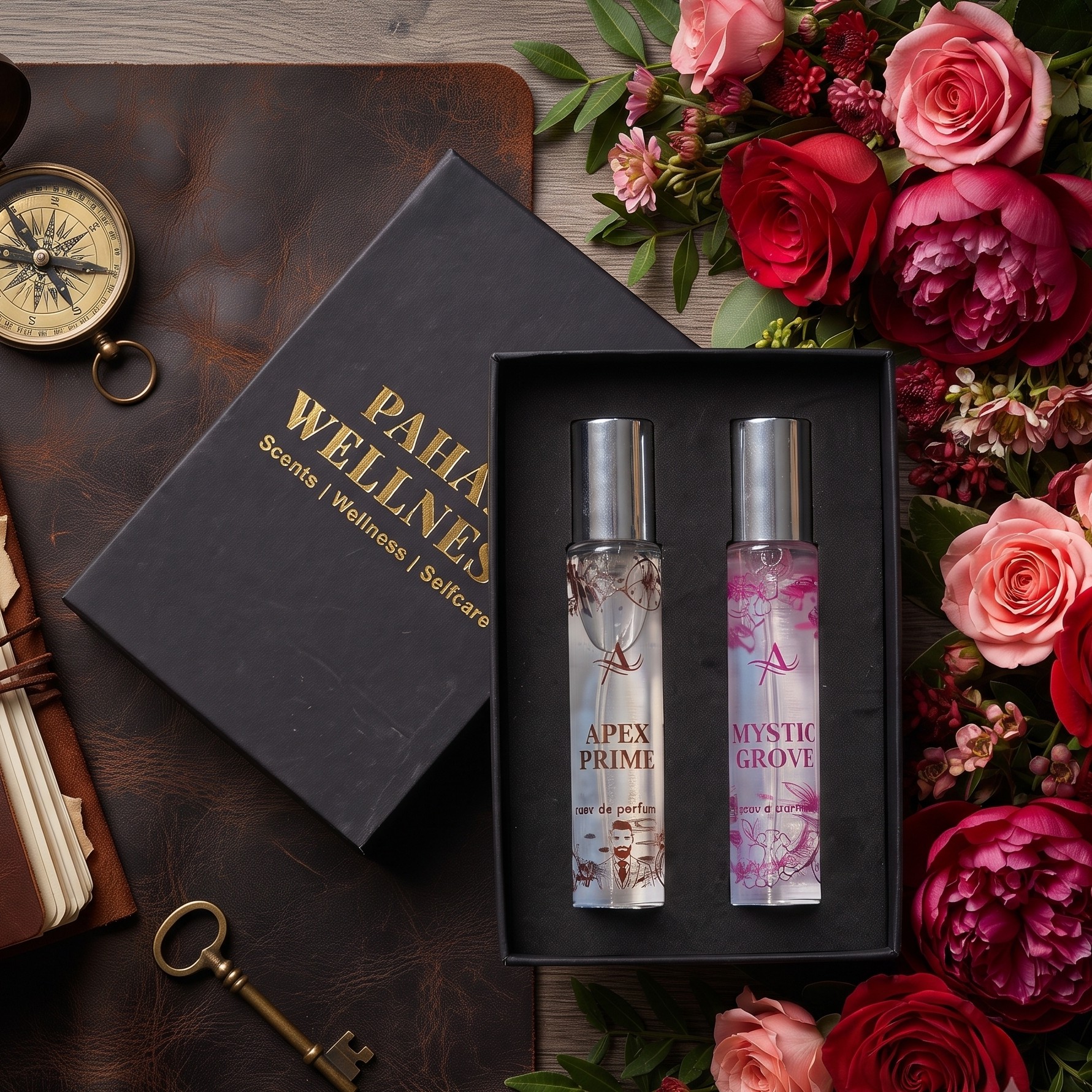
Ever noticed that a fragrance seems to last all day in a winter evening but disappears in the afternoon heat? That is not your imagination.
In hot weather (35-40 degrees C and above):
- Heat speeds up evaporation. Top and middle notes leave the skin much faster.
- The scent can feel loud and sharp for the first few minutes, then drop away quickly.
- Sweat, sun and air movement all add to the loss.
- In places like Vadodara, Ahmedabad and Surat, where summer temperatures regularly cross 40 degrees C, perfumes can seem to vanish within a couple of hours.
In cold weather:
- Evaporation slows down, so the fragrance tends to stay on the skin and clothes longer.
- However, projection can feel lower, because fewer molecules are being released into the air. The scent stays close rather than filling the room.
- Rich, warm fragrances (amber, oud, vanilla, woods) tend to feel at their best in cooler months.
Humidity matters too. Moist air can carry scent well, but it can also change how a fragrance reads on the skin.
Practical tips for hot climates:
- Choose fresher, lighter compositions for daytime summer wear and keep richer ones for evenings.
- Apply to pulse points that are not directly exposed to sun, and consider applying to clothing (check that it won’t stain).
- Carry a small travel-size bottle for a touch-up.
Your Skin Changes How Long Perfume Lasts
Two people can wear the same perfume and have very different experiences. Skin is part of the formula.
- Dry skin: Fragrance molecules cling to oils and moisture. Dry skin has less to hold on to, so perfume fades faster. Moisturising first with an unscented lotion or a light, fragrance-free balm gives the scent something to anchor to.
- Oily skin: It often holds fragrance longer, though the scent may smell a little different because of the skin’s natural chemistry.
- Sweat: Perspiration changes the skin surface, mixes with the fragrance and can alter how it smells. In heat it can also push evaporation along. Some people find certain notes turn sharper or sourer once they sweat.
- Other factors: Diet, hydration, medication, hormones and skin pH can all play a role.
This is why a perfume should always be tried on your own skin, not just on a paper strip, before you decide how it “performs”.
Maceration and Fixatives: Why Restraint Wins
What is maceration?
After the fragrance concentrate is blended with the solvent, the mixture needs time to rest. This resting and blending period is called maceration (or maturation). During this time the ingredients settle and integrate, the scent becomes smoother and rounder, and any sediment can be filtered out. A rushed perfume can smell harsh, disjointed or “alcoholic” at first, while a properly matured one smells more cohesive. Timelines vary with the formula, but weeks rather than days is a common expectation for quality work.
What are fixatives?
Fixatives are materials, often heavy musks, resins, woods and certain synthetic molecules, that slow the evaporation of lighter notes and help a scent last.
The danger of too many fixatives
It is tempting to think, “If a little fixative helps, a lot will help more.” In practice, over-fixing is a classic way to ruin a good fragrance:
- It can flatten the top notes, so the opening loses its sparkle.
- It can mask the heart of the perfume, so the fragrance loses its character.
- It can make the scent heavy, muddy or one-dimensional.
- It can cause cloudiness or sediment and affect clarity and stability.
- In some cases it can make the perfume feel sticky or cloying on the skin.
A fixative should support the fragrance profile, not take it over. This is why we test small batches and trial different levels before recommending a final formula to a private label client.
Nose Blindness: When You Cannot Smell Your Perfume but It Is There
One of the most misunderstood reasons for “my perfume doesn’t last” has nothing to do with the perfume. Olfactory fatigue (nose blindness, or olfactory adaptation) happens when your brain tunes out a constant smell. It is a normal protective function: your nose stops reporting scents that are always present so it can stay alert to new ones.
- You may stop smelling your own perfume within minutes or an hour, while people around you still can.
- If you wear the same fragrance every day, you can become less sensitive to it, which leads to over-spraying.
- Testing many fragrances in a row at a store can overload your nose and make everything smell the same.
What helps: ask someone you trust instead of relying only on your own nose; smell something neutral, such as your own sleeve or fresh air, between tests; rotate between two or three fragrances; and resist adding extra sprays just because you cannot smell it. That is usually the nose adapting, not the perfume failing.
How to Make Perfume Last Longer: A 10-Step Checklist
- Moisturise first. Use an unscented lotion or balm. Applying on skin that is slightly damp after a shower can also help.
- Spray on pulse points: wrists, neck, behind the ears and inner elbows. Where to apply perfume matters because warmer areas diffuse the scent gently through the day.
- Do not rub your wrists together. Rubbing can disturb the opening notes and make them fade faster.
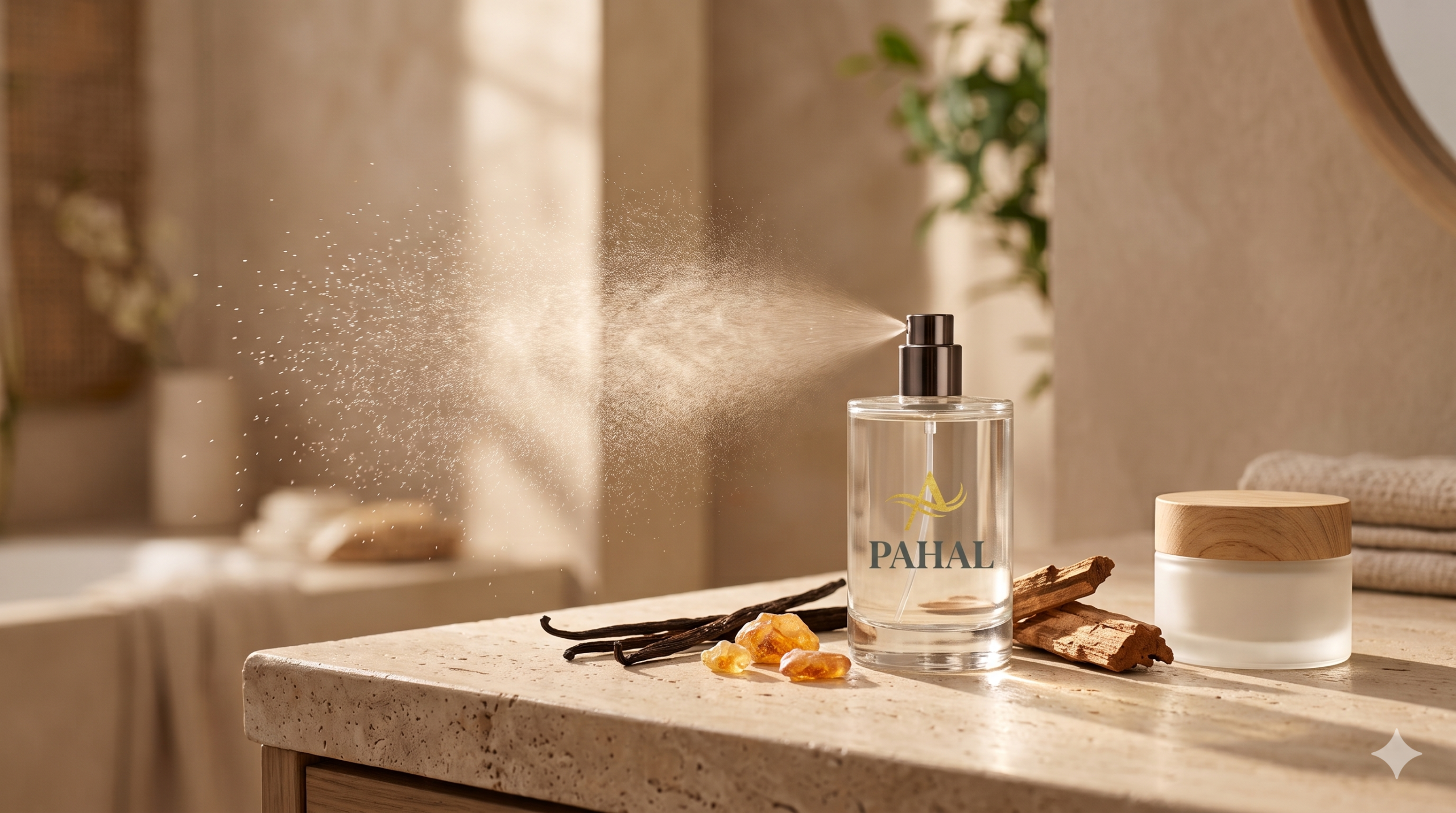
- Choose a composition with a solid base. Woods, amber, musk, vanilla, oud and resins generally outlast citrus and fresh top notes.
- Consider fabric and hair. A light mist on clothing can last longer than on skin. Test a hidden spot first to avoid stains, and avoid delicate fabrics such as silk. Alcohol can dry out hair, so keep hair application light.
- Layer sensibly. A matching or fragrance-free body lotion under your perfume can help build the scent.
- Store it well. Keep bottles away from heat, direct sunlight and humidity, with the cap closed. A drawer or wardrobe beats a bathroom shelf or a car dashboard.
- Match the fragrance to the season. Fresher scents for hot days, richer ones for evenings and winter.
- Carry a travel spray and touch up after 4 to 5 hours.
- Do not trust your nose alone. Remember olfactory fatigue and ask someone else.
Which Fragrance Notes Last Longest?
Note family | Examples | Typical staying power |
|---|---|---|
Base notes | Oud, amber, sandalwood, patchouli, vetiver, musk, vanilla, resins | Longest. Often still detectable hours later. |
Middle (heart) notes | Rose, jasmine, lavender, spices, many florals | Moderate. Define the character of the scent. |
Top notes | Lemon, bergamot, grapefruit, mint, light aldehydes | Shortest. Bright opening that fades quickly. |
Stop Chasing Longevity. Enjoy the Fragrance.
Social media is full of “beast mode” and “12-hour” claims, but a perfume is not a battery. The beauty of a fragrance lies in how it opens, how it develops and how its notes unfold through the day: the bright top, the heart, the warm base. If you only measure a perfume by how many hours it lasts, you can miss what it actually offers.
- There is no harm in reapplying. Touching up after 4 to 5 hours is perfectly normal, and in hot weather it is practical.
- Light and well placed beats heavy and constant. A couple of sprays you enjoy are better than an overwhelming cloud.
- Choose by character, not by claims. Pick a fragrance whose notes you love, then use these tips to get the best out of it.
For brand owners the same thinking applies. The most successful private label perfumes are not the ones with the highest oil percentage. They are the ones with a well-balanced composition, suitable packaging and honest communication with customers about how to wear and enjoy them.
What We See in Our Lab and on the Filling Line
At Pahal Wellness we formulate and fill perfumes ourselves, so the points above come from daily work, not only from reading. Three patterns come up again and again:
- Clients who ask for the maximum concentration are often surprised when a balanced, lower-concentration trial performs better and sprays better.
- A formula that looks perfect in a beaker can behave differently once it is in the actual pump, so we test the filled bottle for spray pattern, output and stability before bulk production.
- Hot-climate performance is a real design constraint for products sold across Gujarat and the rest of India, so we evaluate base-note structure with summer wear in mind.
Planning Your Own Perfume Line? Questions to Ask a Private Label Perfume Manufacturer
If you are comparing a private label perfume manufacturer in India or a white label perfume supplier, longevity is a good test of competence. Ask these questions before you sign:
- Who develops the formula, and can I see how the base-note structure supports longevity?
- Which concentration do you recommend for my pump and format, and why?
- Do you test the finished, filled bottle for spray pattern, output and leakage?
- How long do you macerate, and do you filter and stability-test each batch?
- What are the minimum order quantities, and can I trial a small batch first?
- What documentation and labelling support do you provide for selling in India?
- What is the difference between your white label (ready-made scents) and private label (custom scent and packaging) options?
At Pahal Wellness (Pahal Ventura), Vadodara, we develop and manufacture perfumes and fragrance products for private label brands, boutiques, salons, hotels and corporate gifting. We help you choose the right concentration, fragrance structure and packaging so the product performs in the real world, including India’s hot climate.
Ready to start? Explore our private label perfume services or write to us at contact@pahalwellness.com to discuss your perfume project. |
Frequently Asked Questions
How long does perfume last on skin?
Most perfumes stay noticeable for roughly 3 to 8 hours, but the range is wide. It depends on the base notes, the formula balance, your skin type and the weather. Citrus-led compositions fade fastest, while woody, amber, musk and vanilla bases hold longest. In 40 degrees C heat, expect shorter wear.
How can I make my perfume last longer?
Apply it to moisturised skin, spray on pulse points, avoid rubbing your wrists together, choose a composition with a strong base, store the bottle away from heat and light, and carry a small travel spray for a touch-up after 4 to 5 hours.
Does a higher perfume oil percentage mean a longer-lasting fragrance?
Not necessarily. Longevity depends on the fragrance materials (especially base notes), the balance of the formula, the solvent and your skin. Very high concentrations can make a perfume heavy or unstable without improving performance.
Is eau de parfum always longer lasting than eau de toilette?
Usually, but not always. EDP generally carries a higher concentration than EDT, yet the category names are customary rather than legally defined, so one brand’s EDT can outperform another brand’s EDP. Judge by the fragrance structure and your own skin test.
Why does perfume fade faster in hot weather?
Heat speeds up evaporation, so the lighter notes leave the skin more quickly. In places where temperatures reach 40 degrees C, a perfume can seem to disappear within a few hours. In cooler weather the scent stays closer to the skin and lasts longer, though it projects less.
Why can’t I smell my perfume after a while?
This is olfactory fatigue, also called nose blindness. Your brain adapts to constant smells and stops reporting them, even though the fragrance is still on you. Ask someone you trust before adding extra sprays.
Does dry skin make perfume fade faster?
Yes. Dry skin holds fewer natural oils for fragrance to cling to. Applying an unscented moisturiser first gives the scent something to anchor to.
Why can’t standard spray pumps handle a 35% perfume concentration?
Most standard perfume sprayers are designed for thin, alcohol-based liquids. A very oil-heavy formula is thicker, which can cause poor atomisation, clogging, inconsistent output and leaks. Formula and packaging should be developed together.
What is perfume maceration and why does it matter?
Maceration is the resting and maturation period after blending, during which ingredients integrate and the scent becomes smoother and more cohesive. A rushed perfume can smell harsh or disjointed.
Can I start my own perfume brand with a private label perfume manufacturer in India?
Yes. A private label (or white label) perfume manufacturer develops and produces the fragrance under your brand name. Ask about fragrance development, concentration and pump compatibility testing, stability testing, packaging options, minimum order quantities and regulatory documentation before you commit.