

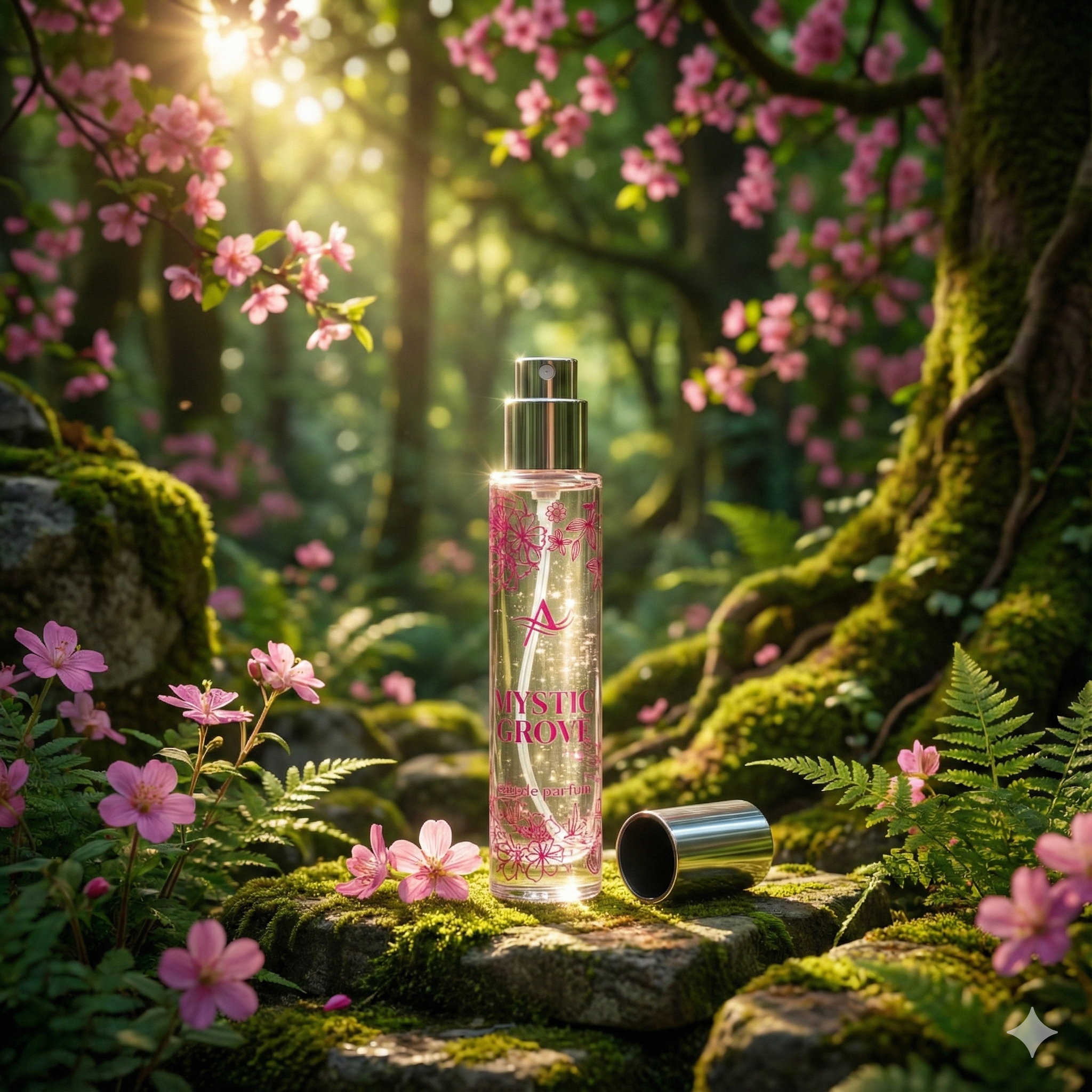
Biodegradable Diffuser Oil for Aroma Machines | Why We Waited 3 Months
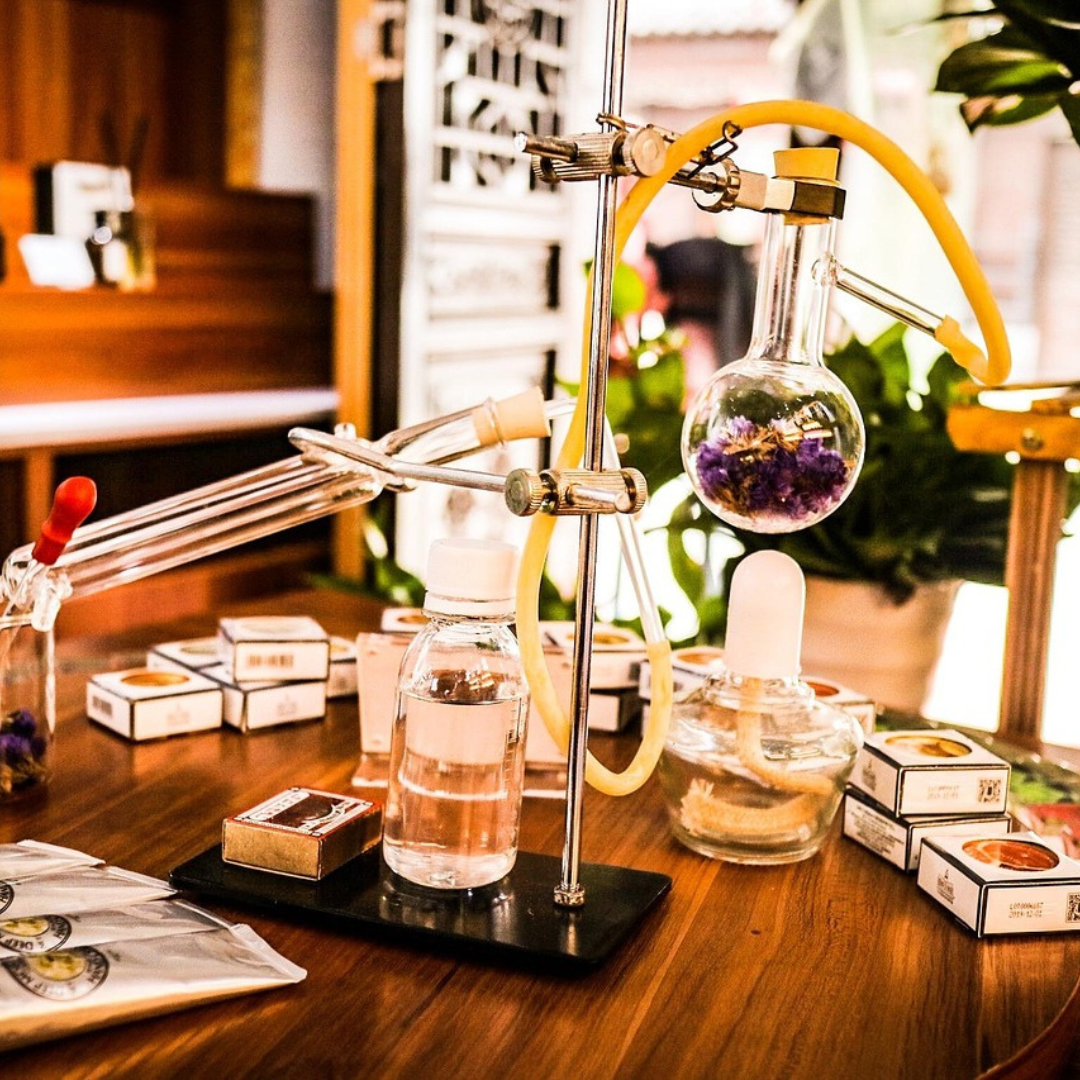
Quick Summary: Pahal Wellness took three months to reformulate the diffuser oil before we launched our commercial scenting machines. Instead of the industry-standard DPG or DEP carriers, we developed a plant-derived, formula that’s biodegradable and leaves no residue after continuous use, and worked with a certified aromatherapist to create four signature essential oil blends around it.
Most companies ship the machine first and figure out the oil later. We did the opposite, and it cost us three months.
When we started building our commercial scenting machines, the hardware was never the hard part. Cold-air diffusion technology is well understood, the components are readily available, and assembling a reliable, silent, programmable unit was straightforward. The oil was the real challenge.
The Industry Default: DPG and DEP – and Why We Moved Away From Them
Look at the catalogue of almost any supplier of fragrance oils and you will find two carriers behind most of the formulations for diffusers and reed diffusers: dipropylene glycol (DPG) and diethyl phthalate (DEP). Both are industry standard for good reason – they’re odourless, they dissolve a wide range of fragrance materials evenly and they’ve been used in perfumery and home fragrance for decades.
Both are also derived from petrochemicals, and neither was something we wanted underpinning a long term product line.
DPG is a synthetic glycol. It’s non-toxic at the concentrations used in fragrance and performs its job well, but it isn’t biodegradable in any meaningful sense. In continuous-use commercial settings, it’s known to leave a faint oily or sticky film over time a real problem when a machine runs for hours a day in a hotel lobby, retail store, or clinic.
DEP is a phthalate ester used as a fixative to help fragrance last longer. Regulatory bodies currently classify it as low-risk at fragrance-use levels, and it’s chemically distinct from phthalates already restricted in cosmetics, such as DBP and DEHP. Even so, DEP belongs to a chemical family under increasing global scrutiny, and a widely cited industry study found phthalates present in the large majority of conventional air fresheners tested. That’s not a footnote we wanted attached to a machine running for hours in spaces where people work, shop, or relax.
Clean-label, phthalate-free formulations have moved from a niche claim to a genuine market shift over the past few years. We wanted to be ahead of that shift, not reacting to it later.
The Real Test: Dry Mist or Wet Residue?
Dry mist, in diffuser terms, means the carrier fully evaporates or aerosolises without leaving an oily or sticky film on nearby surfaces.
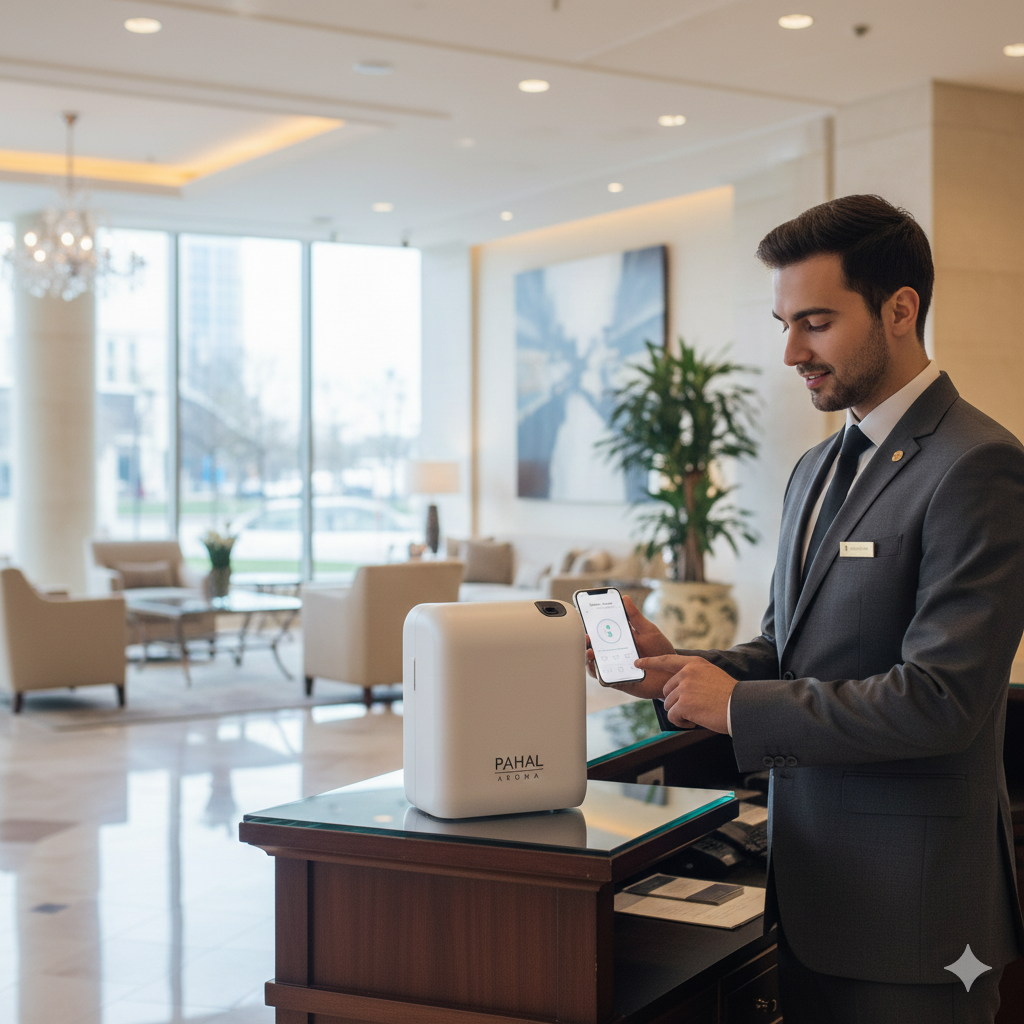
For a home reed diffuser sitting quietly on a shelf, a slightly heavier carrier barely matters. For a commercial cold-diffusion machine covering 5,000-6,000 sq ft and running for hours at a stretch exactly what our machines are built for it matters considerably.
Residue means fine oil settling on furniture, fabric, glass, and event decor over repeated cycles. For a hotel lobby, wedding venue, or retail showroom, that’s not an acceptable trade-off for a pleasant scent. So the brief we set ourselves was simple to state and hard to execute: every fragrance we diffuse floral, woody, gourmand, or oud-heavy has to leave a dry mist and nothing else.
Three Months, Over a Dozen Carrier Materials, One Working Formula
We didn’t arrive at this by tweaking a recipe once or twice. Over roughly three months, we sourced and tested a wide range of plant-derived, biodegradable carrier alternatives against four non-negotiable criteria:
- Broad compatibility — dissolves a wide spread of fragrance families evenly, not just light citrus and floral notes.
- Zero residue — leaves no measurable film after extended, continuous diffusion.
- Safety — non-toxic and safe for use in enclosed commercial spaces.
- True biodegradability — breaks down naturally, instead of persisting the way petrochemical glycols do.
- Longer Machine Performance: A clean, low-residue formulation helps reduce nozzle blockage and supports 4–6 months of hassle-free use.
Most candidates failed on at least one criterion. Some dissolved fragrance beautifully but left a visible film; others were clean but couldn’t hold heavier base notes like sandalwood or oud without separating. We eventually landed on a renewable, diffusion medium that met every requirement: sustainably sourced, fully biodegradable, and critically leaving only a dry, even mist regardless of the fragrance running through it.
Bringing In a Certified Aromatherapist Changed the Brief
Partway through this process, the project stopped being just “find a better carrier oil.” Once we had a formulation that carried fragrance cleanly, we brought in a certified aromatherapist to help build blends with genuine therapeutic intention, not just pleasant top notes. That collaboration is why this became four complete essential oil blends instead of one general-purpose fragrance.
Blend | Key Notes | Character |
|---|---|---|
Liquid Clarity | Lemon, Bergamot, Lavender, Angelica Root | A calm, clear-headed profile bright citrus lifted by lavender’s relaxing effect, grounded by angelica root’s traditional use as a tonic for stress and fatigue. Built for offices, clinics, and wellness spaces. |
Anshen Energy | Orange, Petitgrain, Clary Sage, Sandalwood | Uplifting orange and leafy petitgrain sit over clary sage’s calming, balancing character and a sandalwood base — energizing on top, grounded underneath. Suited to studios, gyms, and alert-focused spaces. |
Pure French Lavender | Single-origin French Lavender | No blending, no distraction — classic, high-grade lavender valued for its purity and universally calming effect. A staple for spas, clinics, and bedrooms. |
Citrus Bloom | Lemongrass, Lemon, Grapefruit, Peppermint, Patchouli | A zesty, energizing morning blend lemongrass and grapefruit for brightness, peppermint for mental clarity, patchouli underneath to keep the citrus grounded. Works well in retail, gyms, and active spaces. |
Every blend runs through the same biodegradable carrier, so the no-residue promise holds across the entire range not just for the easiest, lightest fragrances.
From Diffuser Company to Scenting Expert
We didn’t want to be a company that sells you machines and then you figure out the fragrance yourself. Three months on perfecting the oil, and bringing in outside expertise to create real blends, not just generic scents, is the tipping point for when Pahal Wellness stopped thinking of itself as an aroma diffuser company and started thinking as a scenting expert. A team that sees the machine, the formulation, and the scent experience as one problem, not three.
If you’re a hotel, salon, clinic, retail brand, or event organiser looking for scenting that’s engineered to be clean as well as memorable, this range and the machines built to run it is what three months of “no” got us to.
Explore our private label and commercial scenting options Now!
Frequently Asked Questions
What’s wrong with DPG and DEP in diffuser oils?
Neither is dangerous at standard use levels, and both remain legal, widely used industry solvents. The concerns are environmental and long-term: DPG is petrochemical-derived and not biodegradable, and DEP is a phthalate ester a chemical class facing increasing regulatory and consumer scrutiny globally, even though DEP specifically is considered lower-risk than restricted phthalates like DBP or DEHP.
What does “dry mist, no residue” actually mean for a diffuser oil?
It means the carrier fully evaporates or aerosolises without leaving an oily or sticky film on nearby surfaces after hours of continuous diffusion a bigger concern for commercial machines running all day than for a small home reed diffuser used occasionally.
Is Pahal Wellness’s diffuser oil biodegradable?
Yes. After three months of testing carrier alternatives, Pahal Wellness formulated its diffuser oils around a plant-derived, diffusion medium instead of the DPG or DEP typically used in the industry.
What essential oil blends does Pahal Wellness offer for its scenting machines?
Four in-house blends developed with a certified aromatherapist: Liquid Clarity (lemon, bergamot, lavender, angelica root), Anshen Energy (orange, petitgrain, clary sage, sandalwood), Pure French Lavender (single-origin lavender), and Citrus Bloom (lemongrass, lemon, grapefruit, peppermint, patchouli).
Can I get a custom essential oil blend for my hotel, salon, or event?
Yes. Pahal Wellness offers private label and bespoke scent development on top of its standard blend range, built on the same biodegradable, no-residue formulation.
How long did it take Pahal Wellness to develop this formulation?
Roughly three months of sourcing and testing carrier materials and fragrance combinations before arriving at a formula that met all four criteria: broad fragrance compatibility, zero residue, non-toxicity, and biodegradability.



Subscribe To Our Newsletter
Subscribe for your email and get 10% off your first order!

COPYRIGHT 2024 © PAHAL VENTURA. ALL RIGHTS RESERVED.